
Blending creativity with computer science, Helena Glowacki explored human-centred technology through research, storytelling and artistic practice.
Graduation Spotlight: Jacob Klimczak
Graduation Spotlight: Raghav Sinha
Graduation Spotlight: Pratibha Thakur
Graduation Spotlight: Yuchen Wang
U of T researchers discover graphics card vulnerability that can lead to full system takeover
Graduation Spotlight: Bingjian Huang
Graduation Spotlight: Fernando Yánez
Graduation Spotlight: Kelly Zhu
Canada can play a leading role in the next wave of AI innovation: Waabi CEO Raquel Urtasun
“There is so much capital that we can attract and there is such incredible talent that we have here," Urtasun told U of T President Melanie Woodin during a BetaKit event at Toronto Tech Week
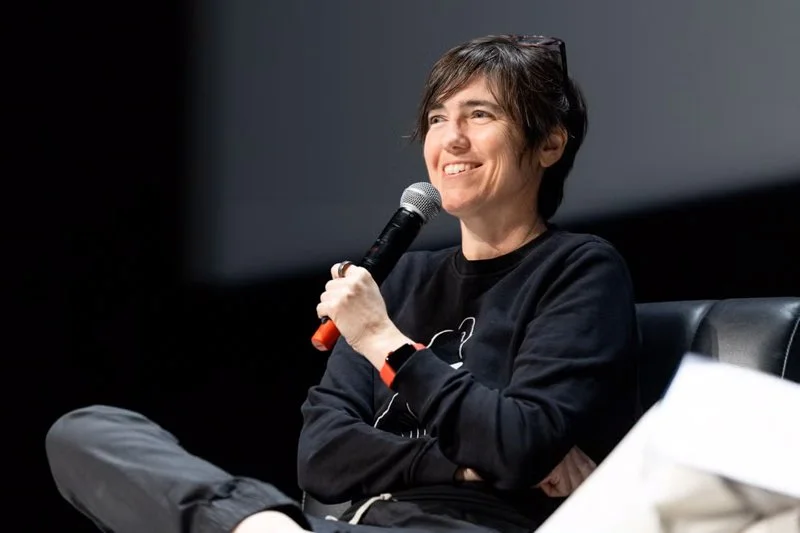
Raquel Urtasun, a U of T professor of computer science who is an expert in autonomous vehicle technologies, is the founder and CEO of self-driving trucking company Waabi, which recently raised up to US$1 billion (photo by Lilac Media / BetaKit)
From self-driving vehicles to new frontiers in robotics, the next wave of AI is moving beyond the digital world — and Canada has the necessary ingredients to chart a bold path forward.
Attendees at a BetaKit Most Ambitious town hall on May 25 heard how innovators, buoyed by the country’s strong university-based research system, could play a critical role in safeguarding Canadian sovereignty in this new era.
Raquel Urtasun, founder and CEO of self-driving vehicle company Waabi, said transportation is an example of a critical industry that’s undergoing a major shift.
“Transportation is something core where — quoting Evan Solomon, our minister of AI — ‘We need to make sure that we have control over our destiny,’” said Urtasun, who is also a professor of computer science at the University of Toronto, during a fireside chat with U of T President Melanie Woodin.
“We need to make sure we can move goods and people regardless of how geopolitics and the world evolve over the next few years.”
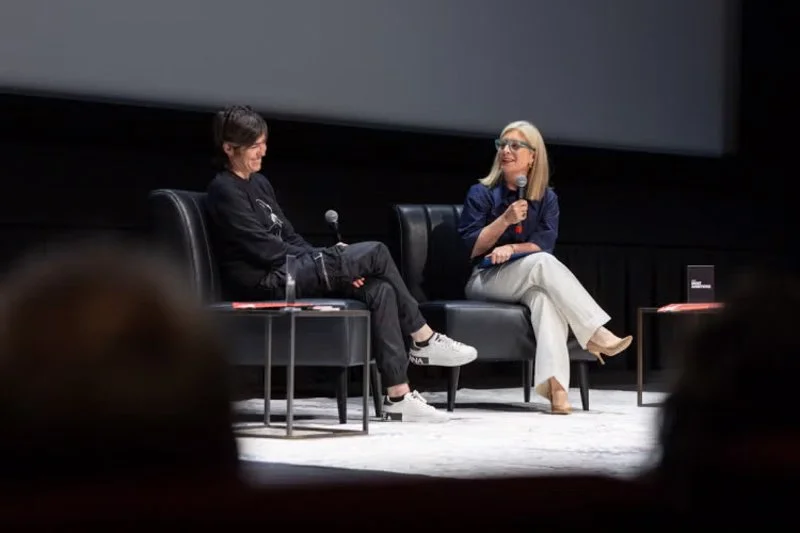
Waabi CEO Raquel Urtasun in conversation with U of T President Melanie Woodin (photo by Johnny Guatto)
Held at the TIFF Bell Lightbox, the event — part of Toronto Tech Week — celebrated the innovators named in BetaKit’s Most Ambitious 2026 issue, nearly a quarter of whom are from the U of T community. It featured remarks from tech, entrepreneurship and political leaders including Solomon, Canada’s minister of artificial intelligence and digital innovation, Toronto Mayor Olivia Chow and Christian Weedbrook, a former U of T postdoctoral researcher who is the founder and CEO of quantum computing company Xanadu, which recently made its debut as a public company.
Urtasun said Canada’s deep roots in AI research and talent offers an opportunity to lead the way in next-generation automotive technology. While the transportation landscape has long been controlled by large car and truck manufacturers, she said that’s changing with self-driving tech.
In addition to Waabi, Urtasun noted that Canada is home to several other key players in autonomous transportation including parts manufacturer Magna International and operating system developer Blackberry QNX. “We have all the important pieces in order to really lead the transportation of the future ... versus ‘Let's just try to follow the U.S. and try to have something that's competitive here,’” Urtasun said.
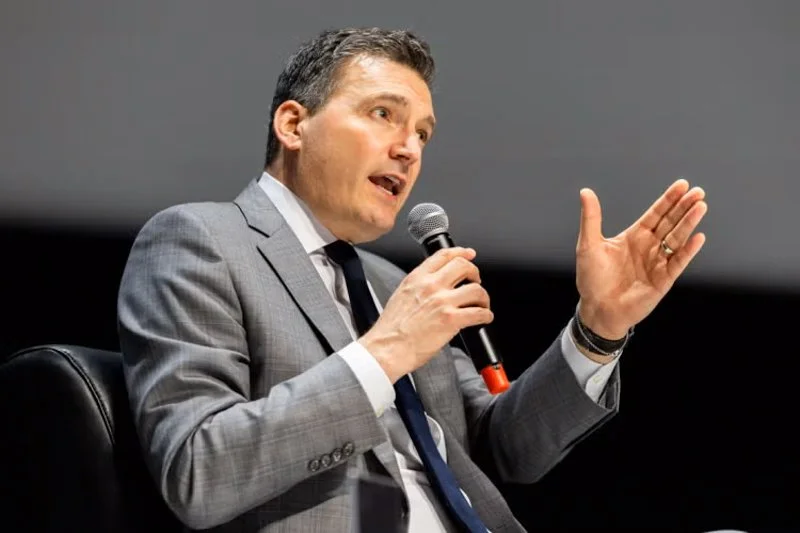
Evan Solomon, Canada’s minister of artificial intelligence and digital innovation, speaks at the BetaKit event at Toronto Tech Week (photo by Lilac Media / BetaKit)
Waabi has already made major moves to establish itself as a global leader in the category. In January, the company announced it raised US$750 million to accelerate commercialization of its self-driving technology – its investors include Volvo, whose driverless truck is powered by Waabi – in addition to US$250 million in milestone-based funding from Uber to expand into robotaxis.
Urtasun said she hopes to see more Canadian success stories in the sector. “There is so much capital that we can attract and there is such incredible talent that we have here in Toronto, and in Canada in general, that we could become ‘the’ player that dictates what it’s going to be.”
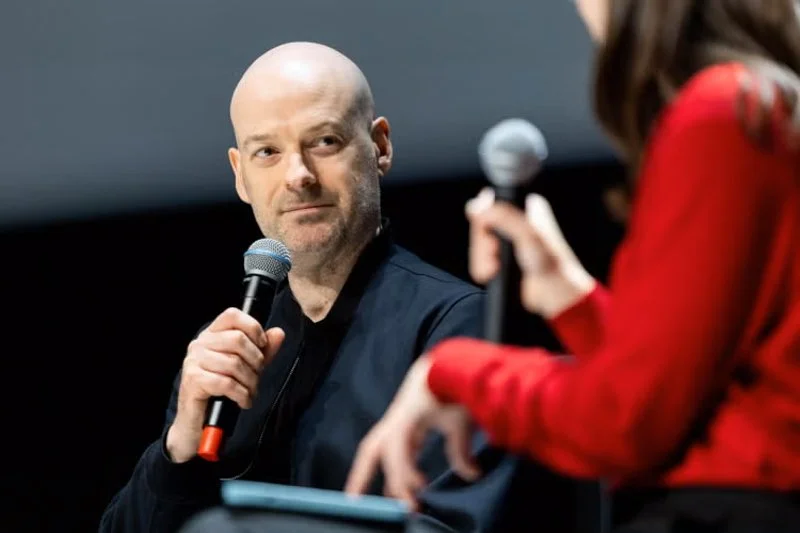
Christian Weedbrook, a former U of T postdoctoral researcher, founded quantum computing company Xanadu (photo by Lilac Media / BetaKit)
Urtasun offered a bold prediction: a majority of vehicles on the road would be “Waabi-powered” within a decade. She also said there were many other potential applications for the company’s physical AI platform, ranging from elder care to mitigation of industrial accidents. “Self-driving is the first big vertical,” she said, adding that “not going all in on physical AI would be such a big miss for the country.”
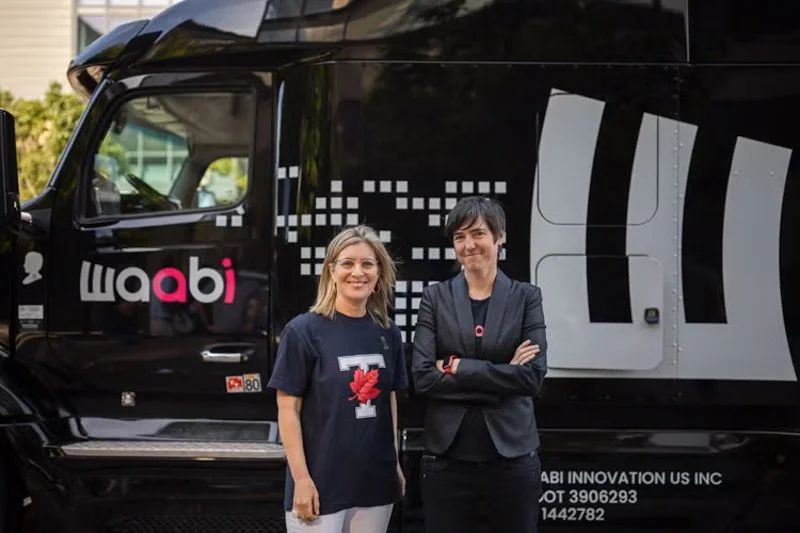
U of T President Melanie Woodin, then dean of the Faculty of Arts & Science, and Raquel Urtasun on campus with one of Waabi’s self-driving trucks (photo by Nick Iwanyshyn)
The conversation also explored the benefits of academics embarking on entrepreneurial ventures. Recounting Urtasun's proposal to take on a leadership role at Uber’s self-driving lab in Toronto in 2017, Woodin — then the dean of the Faculty of Arts & Science — said the arrangement provided U of T graduate students with a compelling opportunity to conduct research and innovation at the forefront of the field.
She added that Urtasun, Weedbrook and others, including the U of T founders behind AI startup Cohere, have also acted as entrepreneurial role models, inspiring students “to want to follow that path.”
Urtasun, for her part, thanked Woodin and former U of T president Meric Gertler for their support.
“Since then, there are many faculty who have provided similar avenues for their students to not have to compromise between academia and industry — but do something that is better than either one of them alone.”
Read more about U of T innovators at Toronto Tech Week
— Original story by Rahul Kalvapalle at U of T News
Raquel Urtasun elected Fellow of the Royal Society
Professor Emeritus Eugene Fiume honoured with Lifetime Achievement Award by CS-Can | Info-Can
CS student leads U of T at Putnam Math Competition and earns U of T Excellence Award
Boyan Litchev was the highest University of Toronto scorer at the 2025 William Lowell Putnam Mathematical Competition, a prestigious contest for undergraduate students across Canada, the U.S. and Mexico. The competition awards scholarships and cash prizes of up to $2,500 to top students and up to $25,000 to top schools.
Inside what mentorship means for U of T’s computer science alumni
Yejin Choi explored AI reasoning to a full house at the April 16 Distinguished Lecture Series
Game on: U of T computer science students level up at the 2026 showcase
Researchers’ visualizations demonstrate a future with climate action — or inaction
Grad Visit Days offers newly admitted CS students an in-depth look at grad life at U of T
For developing interdisciplinary data sciences courses, faculty receive distinguished Northrop Frye Award
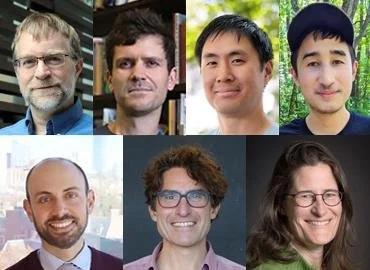
Top (l. to r.): Paul Gries, Adam Hammond, David Liu, Tomomi Parins-Fukuchi; bottom (l. to r.): Michael Widener, Nathan Taback, Mary Pugh.
The prestigious Northrop Frye Award, one of the university’s Awards of Excellence, has been bestowed on the Interdisciplinary Data Science Course Development Team for the creation of three introductory data science courses for students across the faculty — particularly students without a traditional computational or quantitative background.
The team, which includes seven instructors from the humanities, social sciences, life and mathematical sciences, combined their disciplinary and pedagogical expertise to create learning experiences that give students skills applicable to any career, that nurture a critical approach to problems, and that equip them to think outside traditional methods of analysis. The results are innovative courses designed to prepare students to tackle today’s complex challenges.
The courses are: ENG286H1 — Literature and Data; GGR274H — Introductory Computation and Data Science for the Social Sciences; and EEB125H1 — Introductory Computation and Data Science for the Life and Physical Sciences.
The team includes:
Professor Paul Gries, Teaching Stream, Computer Science
Associate Professor Adam Hammond, English
Professor David Liu, Teaching Stream, Computer Science
Professor Tomomi Parins-Fukuchi, Ecology & Evolutionary Biology
Professor Mary Pugh, Mathematics
Professor Nathan Taback, Teaching Stream, Statistical Sciences
Professor Michael Widener, Geography & Planning
The initiative emerged from the Faculty of Arts & Science Computational and Data Studies Working Group that was established to address growing student demand for computational and data-related learning beyond the departments of Computer Science and Statistical Sciences.
U of T’s Awards of Excellence program has recognized exceptional students, faculty, librarians and administrative staff members since 1921. Though the criteria differ for each of the awards in the suite, recipients all share a commitment to enhancing the university experience of their peers and leave a significant impact on the university through their efforts.
“The award recognizes a deeply interdisciplinary and sustained collaboration that has transformed how students across Arts & Science encounter computation and data analysis,” says Karen Reid, professor, teaching stream in the Department of Computer Science, who nominated the team.
“The sustained impact on student learning, combined with the team’s deep interdisciplinary collaboration and commitment to pedagogical innovation, exemplifies the values recognized by the Northrop Frye Award.”
According to Faculty of Arts & Science vice dean, undergraduate Randy Boyagoda, “These three courses demonstrate that when data science education is designed intentionally — grounded in accessibility, interdisciplinarity and ethical awareness — students from across the faculty eagerly and successfully engage with it.
"Students who take these courses will leave university with greater confidence in knowing how data science works, which will matter to their personal and professional lives and make them all the more willing and able to be good contributors to our shared public life,” says Boyagoda, who is also the university’s provostial advisor on civil discourse and a professor in the Department of English.
The success and impact of the team’s work is reflected in a typical student’s feedback: “With its intersection with computer science and traditional English studies, ENG286 prepared me to think about how developing technologies such as AI and an ever-expanding digital marketplace and database can both enrich traditional legal views while also criticizing and promoting new ways to view precedents.”
Original story by A&S News
Steve Engels receives U of T's Joan E. Foley Quality of Student Experience Award
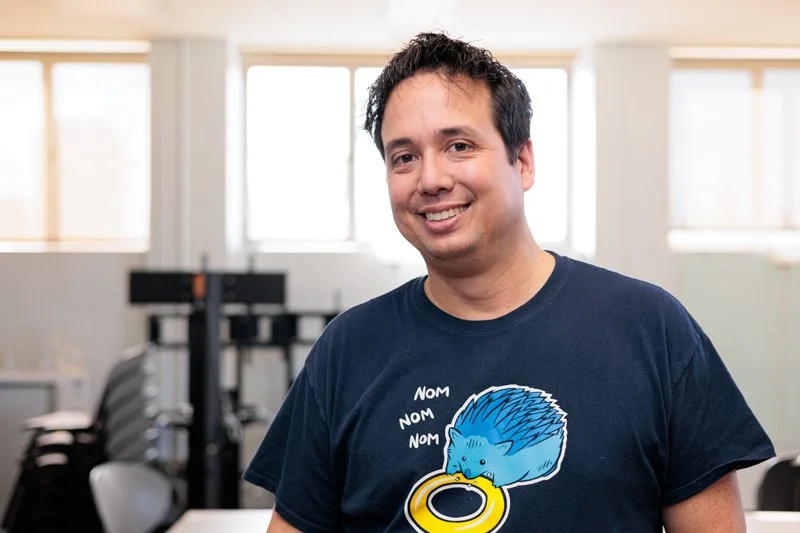
Photo: Matt Hintsa
Steve Engels, a professor, teaching stream in the University of Toronto's Department of Computer Science, has received the Joan E. Foley Quality of Student Experience Award — one of the university's highest honours recognizing contributions to undergraduate and graduate student life.
Presented annually by the U of T Alumni Association, the $1,000 prize goes to a student, faculty or administrative staff member who has made a distinctive and lasting contribution beyond the expectations of their role. Engels was recognized for his work building video game design education and experiential learning opportunities that have shaped the academic paths of hundreds of students.
In 2007, Engels created CSC404: Introduction to Video Game Design, a course that draws students from Computer Science, OCAD University and U of T's Faculty of Music to collaborate in multidisciplinary teams. In a 2024 interview, Engels recounted creating the course after a student expressed interest in game design. Many first-year students now cite CSC404 as a reason they chose to study computer science at U of T.
The course became the foundation for the Level Up Showcase, which Engels co-founded in 2011 with collaborators from OCAD University and Ontario Tech University. What began as a modest end-of-term exhibition has grown into one of the largest student game showcases in Ontario, drawing more than 4,000 attendees in 2025 and featuring teams from more than 20 colleges and universities. Industry partners including Ubisoft and Zynga participate as judges and audience members, giving students direct exposure to professional networks and career opportunities.
Beyond the classroom and showcase, Engels has developed research and outreach experiences that connect students to real-world applications of game design. Through partnerships with the Royal Ontario Museum, Toronto Rehab Institute, the Institute of Forensic Sciences at U of T Mississauga, U of T’s Ontario Institute for Studies in Education (OISE) and various community organizations, students have contributed to projects ranging from museum interactive exhibits to rehabilitation tools and educational games.
"Steve's work exemplifies what it means to go above and beyond for students," said Eyal de Lara, professor and chair of the Department of Computer Science. "From a single course to a province-wide showcase and a network of community partnerships, he has built something that continues to open doors for students long after they leave the classroom."
The Joan E. Foley Award is named in tribute to the late Joan Foley, who served as the first female Provost of U of T and first female Principal of U of T Scarborough. It is presented as part of the university's annual Awards of Excellence.