Associate Professor Bo Wang’s work is cited in an examination of how AI can help scientists analyze vast amounts of biological data and identify promising areas for further research.
Associate Professor Sanja Fidler is among the researchers appointed to a new 13-person federal council advising the government on Canada's national AI strategy.
Assistant Professor Gururaj Saileshwar discusses the risks posed by a massive driver’s licence data breach and steps Canadians can take to protect themselves.
Faculty members Geoffrey Hinton, Gennady Pekhimenko and Raquel Urtasun, along with alumnus Nick Frosst, discuss Toronto’s status as a leading hub for AI.
Associate Professor Aleksandar Nikolov is among the experts quoted on a long-sought advance in the mathematics of fair division, bringing researchers closer to proving a 30-year-old conjecture.
Associate Professor Sanja Fidler launches a Toronto startup aimed at using AI-generated simulated worlds to train robots, securing US$90-million in venture funding.
In an op-ed, Professor, Teaching Stream Michelle Craig, Professor, Teaching Stream Karen Reid and co-authors argue that computing education must be fundamentally reimagined now that AI tools can write code on students' behalf.
Recent U of T computer science graduate Yuchen Wang is featured for his research applying AI to patient care, including work at Toronto Rehab and the Vector Institute.
Professor Lisa Strug argues that data science must be central to Canada's AI strategy — and that without more funding and training, AI tools risk producing unreliable results.
An examination of AI-powered plain-language database tools features Professor Nick Koudas on the risks of queries that look correct but miss what a user actually meant.
Assistant Professor Gururaj Saileshwar explains a newly discovered weakness that could let attackers take full control of a computer by exploiting its graphics card memory.
In an op-ed, Professor Arvind Gupta and NSERC President Alejandro Adem argue that Canada’s structural advantages are finally becoming urgent strategic assets.
Assistant Professor Chris Maddison, a founding member of the AlphaGo team, reflects on the AI breakthrough's lasting legacy and what it reveals about the conditions needed for AI progress.
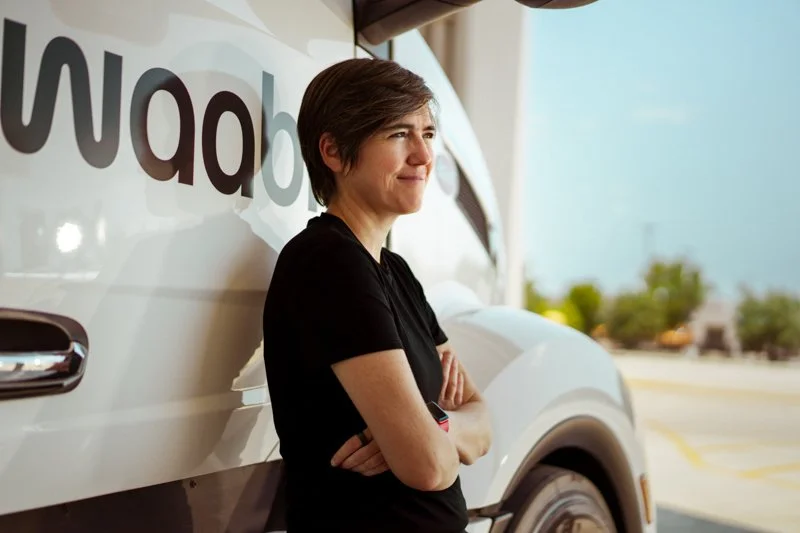
The list includes Professor Raquel Urtasun and her start-up Waabi, which is using AI to train self-driving trucks — and soon, robo-taxis — without costly real-world testing.
A profile of the industry-academic electric vehicle program led by Professor Arvind Gupta, which places graduate researchers inside Ontario companies to help Canada carve out a niche in the global EV industry.