
Graduate Research Labs
Work alongside world-renowned faculty and a community of driven researchers to tackle some of computer science's most important challenges. Explore a selection of research labs currently recruiting graduate students and discover where your ideas can make an impact. View the full list of our faculty and researchers.
Uma Girish’s Research Lab
-
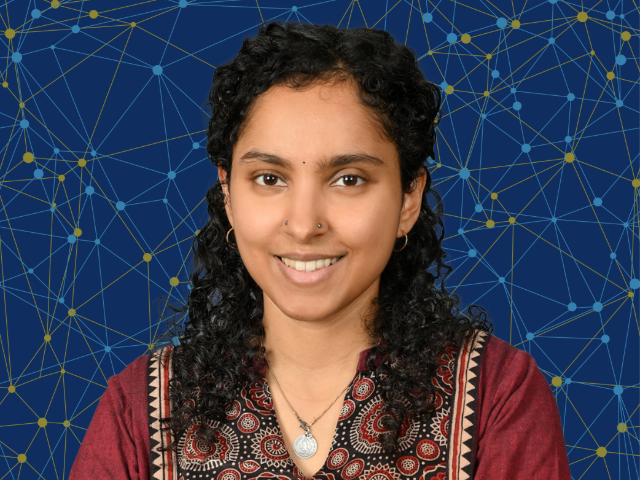
I am an Assistant Professor of Computer Science. Previously, I was a Postdoctoral Research Scientist at Columbia University hosted by Professor Henry Yuen and obtained my PhD at Princeton University advised by Professor Ran Raz.
Professor Girish studies quantum complexity theory, with the goal of uncovering the mathematical principles underlying quantum speedups. Her research asks what gives quantum algorithms their power, which problems can exhibit genuine quantum advantages, and where the limits of those advantages lie. She approaches these questions using ideas from mathematics and theoretical computer science, drawing on tools such as Fourier analysis, pseudorandomness, representation theory and extremal combinatorics. She is excited to work with students with strong backgrounds in mathematics or theoretical computer science who are interested in exploring fundamental questions about the power of quantum computation.
Privacy-Preserving Systems (PPS) Lab
-
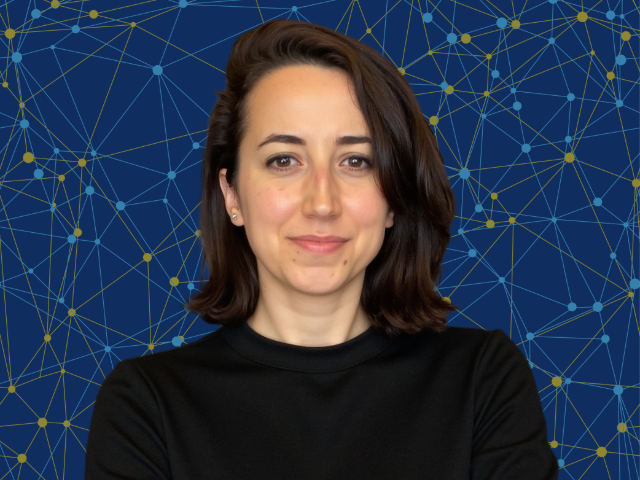
Anwar Hithnawi is an Assistant Professor of Computer Science at the University of Toronto, where she leads the Privacy-Preserving Systems Lab. Her research sits at the intersection of computer security, cryptography, and systems, with a focus on designing practical privacy-preserving systems. She completed her Ph.D. in Computer Science at ETH Zurich and spent two years as a postdoctoral researcher at UC Berkeley. From 2020 to 2024, she was an Ambizione Fellow and research group leader at ETH Zurich.
The Privacy-Preserving Systems Lab develops systems and cryptographic techniques for building trustworthy data and AI systems. Our current research spans privacy-preserving computation, zero-knowledge proofs and verifiable computation, secure machine learning, and the security and accountability of modern AI systems. We are particularly interested in systems–cryptography co-design: turning powerful cryptographic and privacy techniques into practical systems that can operate at real-world scale. Prospective students interested in privacy, applied cryptography, systems security, trustworthy AI or problems at the intersection of these areas are encouraged to apply.
Tom Ristenpart’s Research Lab
-
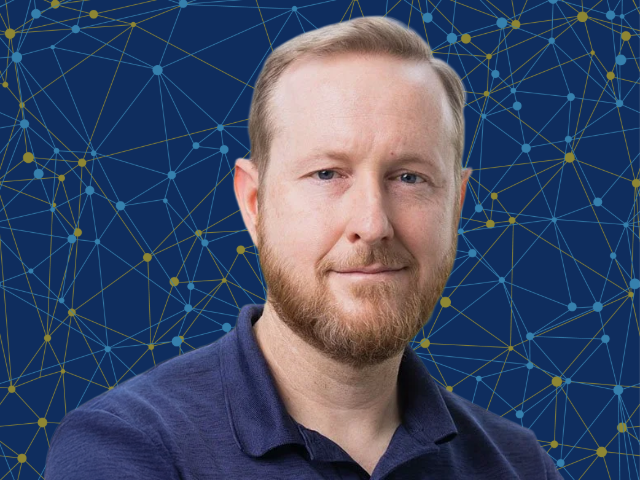
My research is in computer security, with recent topics including interpersonal technology abuse, applied and theoretical cryptography, and authentication. I'm part of a research team working on computer security and privacy issues in the context of interpersonal violence. This led us to found the Clinic to End Tech Abuse.
See my full list of publications or check out some descriptions of my work here.
My research group works on a variety of topics in computer security. Recent focuses are: (1) interpersonal tech abuse including understanding of AI-facilitated coercive control and tech safety clinic design, deployment, and evaluation; (2) AI systems security including containment mechanisms and procedures; and (3) applied cryptography including new standards for general-purpose authenticated encryption schemes.
Ohad Shamir’s Research Lab
-
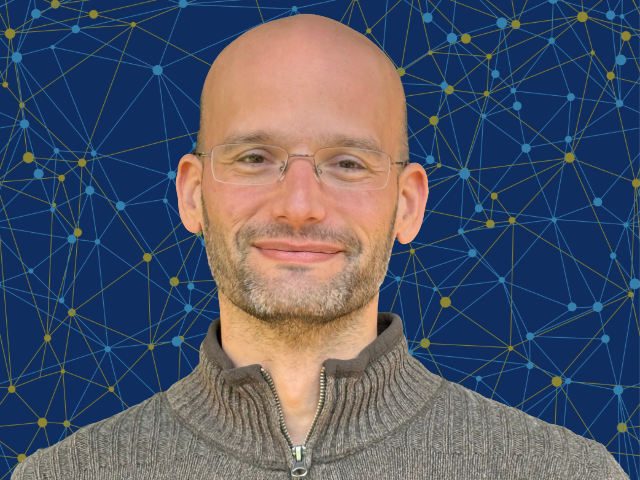
Ohad Shamir is joining the Department of Computer Science at the University of Toronto as a full professor. He is also a Canada CIFAR AI Chair at the Vector Institute, and a professor (currently on leave) at the Weizmann Institute of Science. In the more distant past, he also held visiting and research positions at Google Research and Microsoft Research.
Professor Shamir's work focuses on theoretical machine learning, where the goal is to develop, analyze and understand machine learning algorithms in a mathematically rigorous manner. In recent years, his group's work concentrated in areas such as the theory of deep learning systems, optimization methods for machine learning, and learning under information and communication constraints.