
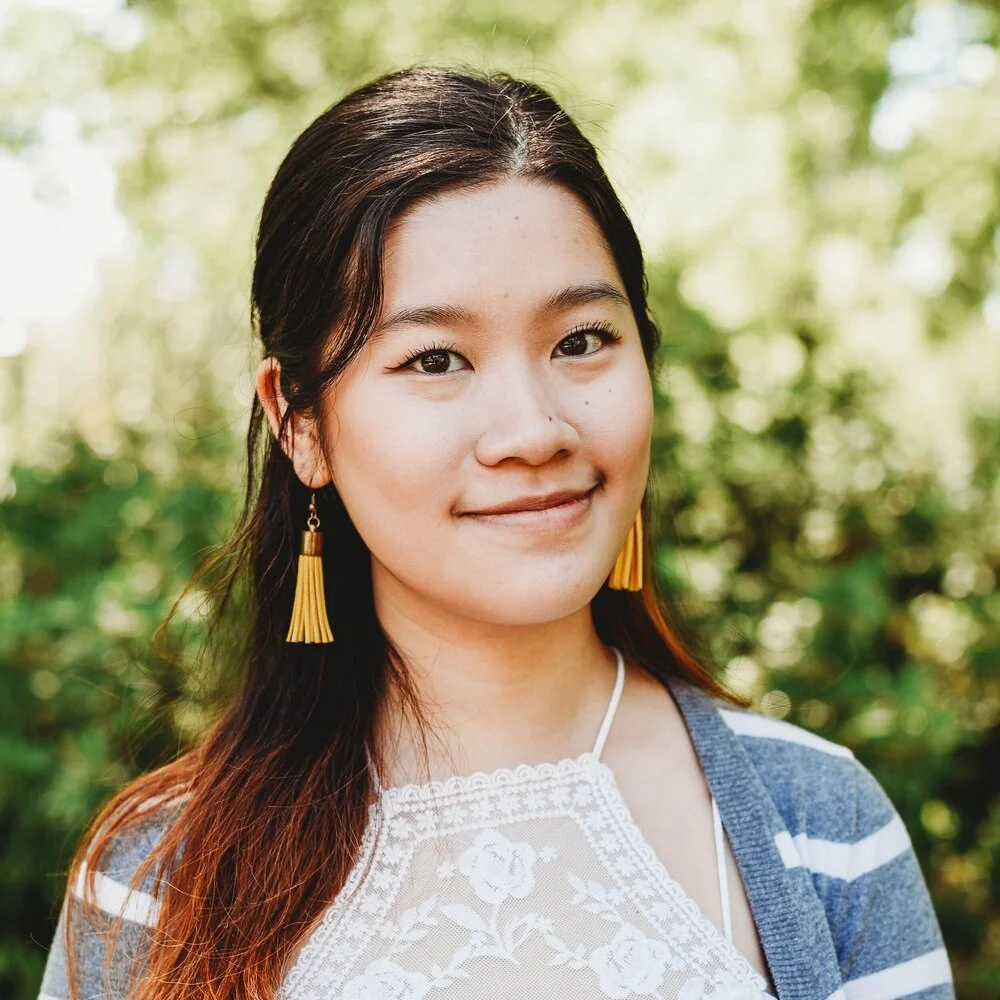
Blue (Georgianna) Lin is the recipient of the 2025 Canadian Computer Science Distinguished Dissertation Award from CS-CAN|INFO-CAN.
Blue (Georgianna) Lin’s dissertation began with a question about why period-tracking apps often get predictions wrong. But rather than setting out to answer it through conventional computer science alone, the recent U of T PhD graduate followed the health problem wherever it led. The interdisciplinary approach — which brought together health informatics, physiology, health literacy and human-centred design — has earned her one of the highest honours in Canadian computer science.
Lin is the recipient of the 2025 Canadian Computer Science Distinguished Dissertation Award, which recognizes exceptional doctoral research that represents a significant contribution to computer science.
“It’s incredibly meaningful to have this work recognized because it acknowledges that computer science is interdisciplinary and affects so many aspects of other fields,” Lin says of the award from CS-CAN|INFO-CAN, the national organization representing computer scientists across Canada.
In announcing the award, CS-CAN|INFO-CAN praised the dissertation for contributing “a framework for more comprehensive, personalized, and adaptive health tools,” while advocating for a more proactive approach to menstrual health literacy that recognizes its connection to overall well-being.
Looking beyond a single discipline
Lin’s dissertation, Multimodal Tracking with Ubiquitous Devices to Foster Holistic Menstrual Health Sensemaking, addresses a critical and underserved gap in personal health technology. It investigates how access to less-commonly tracked physiological signals, such as heart rate and body temperature, captured through consumer health devices, can expand users’ understanding of their own health.
“I went in with the problem in mind instead of focusing on what the solution should look like,” says Lin. “That ended up making me think about health, women, societal perceptions and all of these things that inform how someone will actually use a piece of technology.”
Putting people at the centre
Working across disciplines also changed how Lin viewed the role of technology itself. Rather than seeing it as a complete solution, she came to see it as one part of a broader system that includes education, clinical care and public understanding.
“Technology alone doesn’t tell you what it should do or what should inform it,” she says. “A person’s life is more than the technology they use. They’re also informed by school, the people around them and their experiences. Technology can help a lot, but all of that requires interdisciplinary knowledge.”
Now, with the research complete, Lin is exploring ways to bring its ideas into people’s hands through accessible tools that help people make more informed decisions about their health.
“If someone uses menstrual health technology 10 years from now, I hope they’ll live with less uncertainty,” she says. “If technology can help people better understand what’s happening in their bodies and give them the confidence to make informed decisions, then that’s the impact I hope this work will have.”