
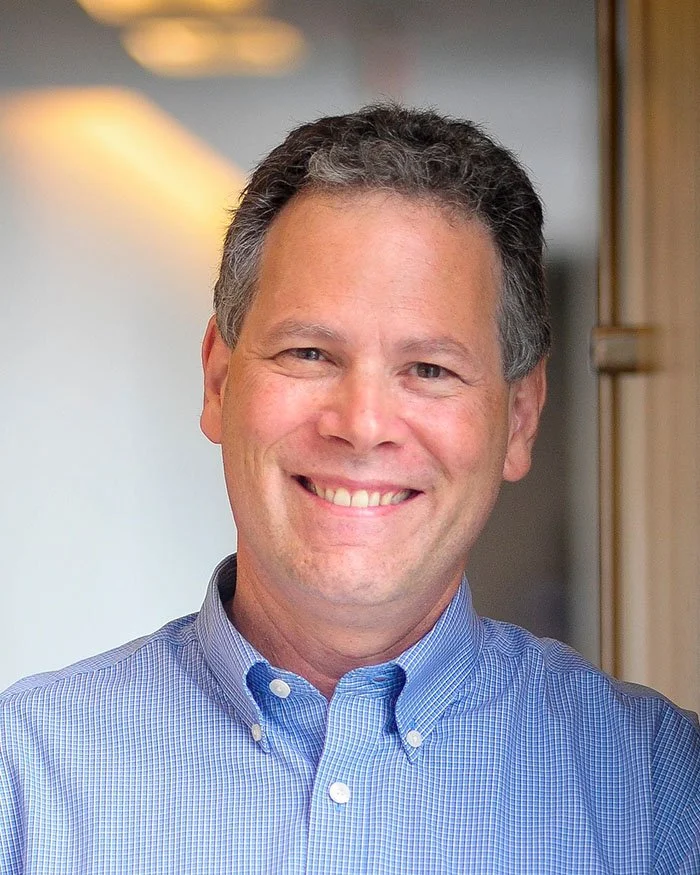
Professor David Fleet
David Fleet has been elected a Fellow of the Royal Society of Canada, one of the country’s highest academic honours. An internationally recognized leader in computer vision and artificial intelligence, Fleet has built a research career around what he describes as a simple fascination with how the world works.
“The world is full of exciting, interesting problems,” says Fleet, a professor in the University of Toronto’s Department of Computer Science and a Principal Scientist at Google DeepMind. “Any problem, when you dig deep enough, is fascinating. That gives you endless opportunities for discovery, exploration, learning and awe.”
Fleet’s curiosity has taken him from generative AI and visual motion analysis to structural biology, with research spanning computer vision, visual neuroscience, machine learning and computational biology.
In his work with cryo-electron microscopy, for example, Fleet has applied computer vision and machine learning to help researchers reconstruct the three-dimensional structures of biological molecules from noisy images. Methods developed by Fleet and his collaborators helped determine the structure of the SARS-CoV-2 spike protein, giving researchers a detailed view of the part of the virus that binds to human cells.
“A lot of science is done in relative anonymity,” Fleet says. “It was one of those rare moments where more than five people cared about the work you did.”
The RSC Fellowship — which recognizes peer-elected individuals who have made remarkable, lifelong contributions to their fields and public life — offers a chance to step back and spotlight that work. For Fleet, the spotlight extends beyond his research to the many colleagues, students and mentors he has worked with along the way.
“It’s been an incredible journey, and what’s made it great is working with so many great people,” Fleet says. “One of the great privileges of my job and career is the ability to explore new fields, develop new ideas, and always keep learning with brilliant people.”