
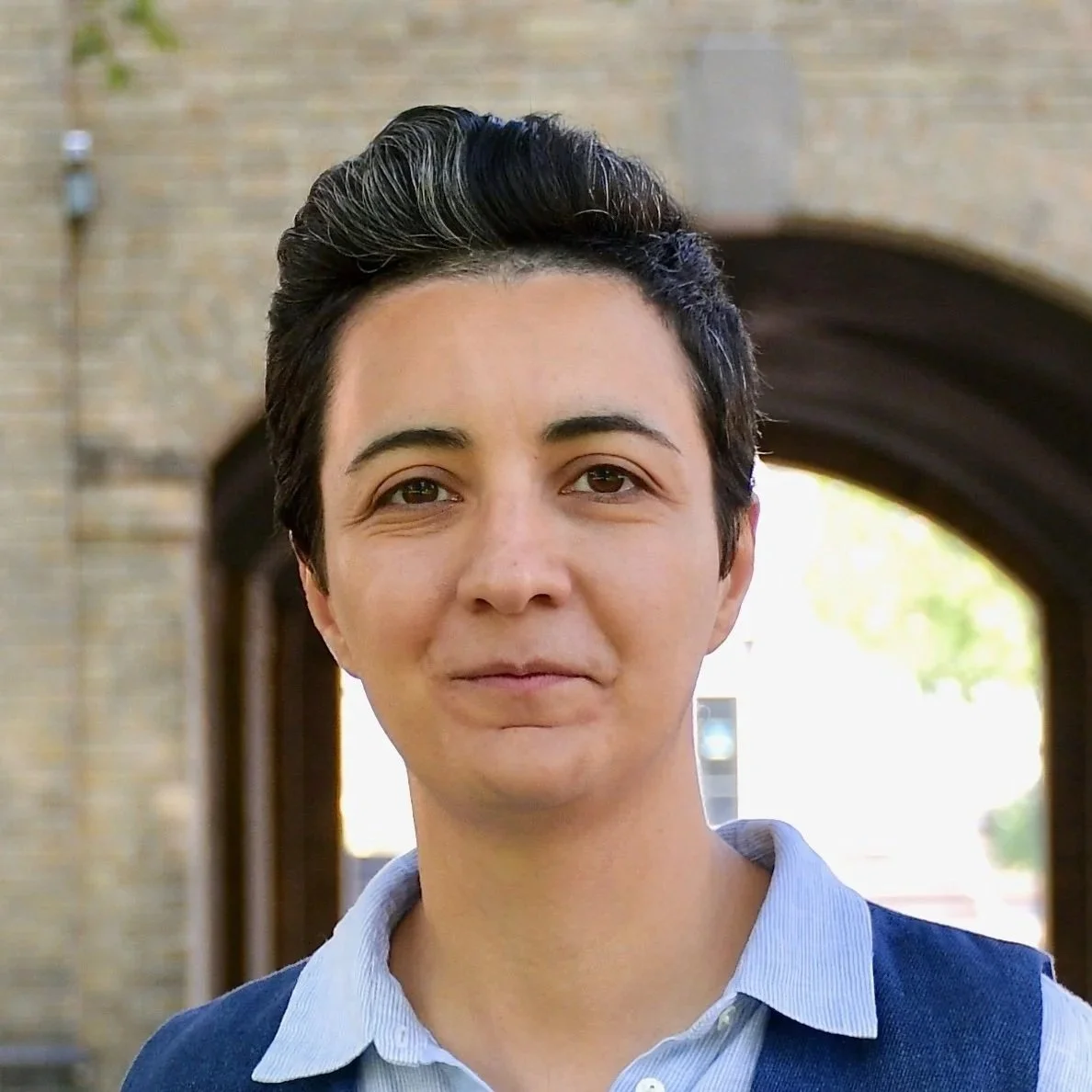
Bahar Aameri
Assistant Professor, Teaching Stream
For Bahar Aameri, teaching computer science is about helping students see past the complexity. As a new assistant professor in the Department of Computer Science’s teaching stream, she is also committed to creating more inclusive pathways into computing.
Aameri’s own path to computer science began with computer engineering at Tehran Polytechnic in Iran and continued through graduate studies in Canada — including a master’s in computer science at Brock University and a PhD at the University of Toronto.
Along the way, Aameri became increasingly interested in the field’s theoretical side, particularly formal logic and its applications in AI.
What attracted you to U of T and the Department of Computer Science (DCS)?
I originally came to U of T as a PhD student in 2010. So, I’ve been part of the university in many roles: graduate student, instructor, postdoctoral fellow and faculty member.
What I particularly value about DCS is the combination of excellent research and a large, diverse student community. There is room to contribute through teaching, research, student mentorship and outreach.
When you’re not teaching, researching, or thinking about computer science, how do you like to spend your time?
Soccer is probably the biggest one! I play on and coordinate a co-ed soccer team, and I used to be an assistant coach for U14 teams at Richmond Hill Soccer Club. I also enjoy reading and building 3D wooden puzzles. The puzzles can occasionally become much more time-consuming than I expect!
You’ve taught students at every level, from introductory programming to graduate AI courses. What do you enjoy most about teaching computer science?
A lot of computer science can feel intimidating at first. I enjoy breaking ideas into smaller pieces, showing how they connect, and watching students develop the intuition to reason through problems on their own.
I also value the human side of teaching. Students learn better when they feel comfortable asking questions, making mistakes and seeking help. For me, good teaching combines clarity, engagement and care.
Creating inclusive pathways into computer science has been a major focus of your work. Why is that so important to you?
Coming to Canada for school made me aware of how much mentorship, support and a sense of belonging can shape someone’s higher education experience. Students come into computer science with different backgrounds, opportunities and levels of confidence, and those differences don’t reflect their potential. That’s why I care about creating environments where opportunities are genuinely open to students.
Your research explores logic-based approaches to artificial intelligence. How can these methods help create more trustworthy AI systems?
Logic-based AI gives us ways to represent knowledge explicitly and reason with it according to well-defined rules. That matters for trustworthiness because, in many situations, we don’t just want an AI system to give us an answer; we want to understand why it gave that answer and whether it respected the constraints we care about.
Formal representations can make parts of an AI system easier to inspect, verify and explain. They also allow us to represent domain knowledge explicitly and reason about consistency, which can be particularly valuable in areas where mistakes have real consequences.
This Q&A has been edited for clarity and length.