
Distinguished Lecture Series
2026-2027 Speakers

Allan Borodin
University Professor, Department of Computer Science
University of Toronto

Joseph M. Hellerstein
Jim Gray Professor of the Graduate School, UC Berkeley
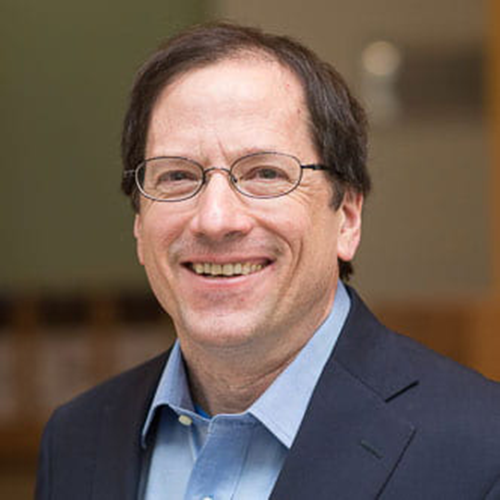
William T. Freeman
Thomas and Gerd Perkins Professor of Electrical Engineering and Computer Science (EECS), MIT
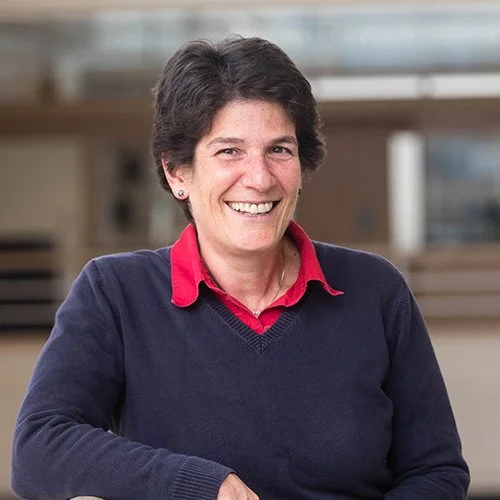
Margo Seltzer
Canada 150 Research Chair in Computer Systems
Cheriton Family Chair in Computer Science, University of British Columbia
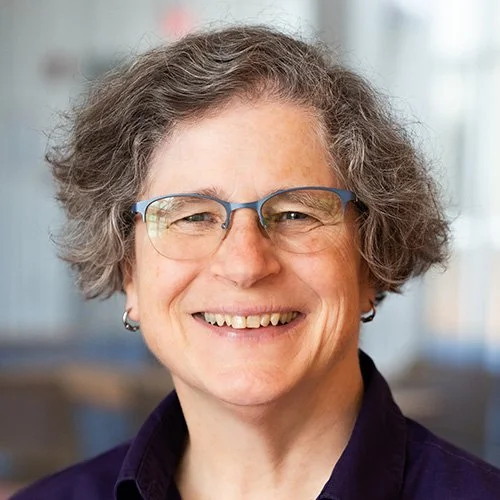
Leslie Pack Kaelbling
Panasonic Professor of Computer Science and Engineering, MIT
Reflections on a Long Career and What's Next
Thursday, September 17, 2026
11 a.m.
Bahen Centre for Information Technology, BA 3200
Abstract:
University Professor Allan Borodin will begin his talk with reflections on the history of the department before exploring the current landscape of "teaching and research in the new world of AI/ML/LLMs." Every day, it seems there is another announcement about the solution to a famous open question in mathematics or theoretical computer science, not to mention rogue AI agents that create cyberattacks while attempting to cover their tracks. Given this, it is more than reasonable to ask: "Could a person, or any institution, last 57 years in this new world?"
Borodin will reflect on that question before walking us through his career. He will highlight some results he feels particularly proud of, discuss the general theme of his research (without realizing at the time that there was one), and touch on some of his more recent activities.
He will conclude with a few thoughts on how he has sustained himself through a lengthy DCS career and the University of Toronto for 57 years.
Bio:
Allan Borodin is a distinguished computer scientist and University Professor in the Department of Computer Science at the University of Toronto. He earned a Bachelor of Arts in Mathematics from Rutgers University in 1963, followed by a Master's degree from the Stevens Institute of Technology in 1966 while working part-time as a programmer at Bell Laboratories. He then pursued doctoral studies at Cornell University, completing his PhD in 1969 under the supervision of renowned computer scientist Juris Hartmanis.
Borodin joined the University of Toronto faculty in 1969 and was promoted to Full Professor in 1977. He served as Chair of the Department of Computer Science from 1980 to 1985 and was appointed University Professor in 2011, one of the institution’s highest academic distinctions.
Internationally recognized for his pioneering contributions to theoretical computer science, Borodin's research has advanced the understanding of computational complexity, online algorithms, resource tradeoffs, and algorithmic models. His achievements have been recognized through numerous prestigious honours. He was elected a Fellow of the Royal Society of Canada in 1991, received the CRM-Fields-PIMS Prize in 2008, became a Fellow of the American Association for the Advancement of Science in 2011, and was named a Fellow of the Association for Computing Machinery in 2014 for his influential contributions to theoretical computer science. In 2020, he was appointed an Officer of the Order of Canada in recognition of his outstanding impact on the field and on Canadian scholarship.
Determinations: Theory and Practice
Tuesday, September 29, 2026, 11 a.m.
Abstract:
Every time a language model writes a proof, a plan, or a program, it does something our usual theory of computation does not explain: it commits, token by token, to one answer among many admissible ones. This is not the familiar picture of computation as evaluating a function — given an input, produce the one correct output. It is the separate task of resolving a relation: choosing one of many admissible outcomes by making irrevocable commitments that progressively narrow the possibilities. This setting is by no means AI-specific; it is surprisingly widespread in modern computing. A distributed system in the cloud must settle on one consistent state from a set of admissible ones; a database system must choose an ordering of concurrent transactions; a market or auction must select one equilibrium.
We call the structure of commitments a determination. This talk develops a theory of determinations around three questions, each with a clean answer:
1. When are irrevocable commitments unavoidable? Exactly when a specification's outcomes are non-monotone over history. This Complete CALM Theorem generalizes a foundational result from databases and distributed systems, and yields a Complete CAP Theorem as a corollary.
2. How many commitments are required? We introduce determination complexity: the number of irreducible sequential layers a task forces. It is a new axis, with autoregressive generation (think Chain-of-Thought) as a natural witness of orthogonality from computational complexity.
3. Why would a particular outcome emerge, and how likely is it? These are determination provenance questions, answered by extending the theory of data provenance to the determination setting. The algebra is different from classical provenance — a filtration — suggesting a bridge to measure theory and probability.
The theory pays off in practice. Hydro, an open-source Rust framework for distributed programming, instantiates it directly: the compiler rejects programs with unintended race conditions, and applies Complete CALM to report the consistency level of each output. Hydro also points toward a new kind of observability that can answer the "why" questions above.
The talk is aimed at systems, theory, and AI researchers alike.
Bio:
Joseph M. Hellerstein is the Jim Gray Professor of the Graduate School at UC Berkeley, and a VP/Distinguished Scientist at Amazon Web Services where he leads the Hydro open source project. His research focuses broadly on data-oriented systems and the way they drive computing. This spans topics in database systems, distributed computing, programming languages and AI. Hellerstein is an ACM-SIGMOD Codd Award winner and a Fellow of the ACM. His industry work prior to AWS includes co-founding multiple startups and leading industrial research teams.
The support zipper and its applications to portable structures and robotics
Thursday, October 8, 2026, 11 a.m.
Abstract:
With the help of collaborators, Bill Freeman recently completed a 40-year-long project. He developed a zipper with a novel function: when zipped, it becomes a rigid structural support, and when unzipped, it remains flexible. Applications include portable structures such as tents, where the zipper can replace traditional tent poles, as well as portable chairs, medical devices, and robotic legs whose lengths can adjust mid-stride.
In this talk, Freeman will describe the journey of this invention and the associated entrepreneurial efforts, from the initial hand-cut basswood models used for a 1986 patent (now expired) to the current 3D-printable design, which has been showcased in videos that have garnered more than 20 million views.
This work was conducted in collaboration with Jiaji Li, Maxine Perroni-Scharf, Xiang Chang, Mingming Li, Jeremy Mrzyglocki, Takumi Yamamoto, Dingning Cao, and Stefanie Mueller, and was presented at ACM CHI 2026.
Bio:
William T. Freeman is the Thomas and Gerd Perkins Professor of Electrical Engineering and Computer Science (EECS) at MIT. Since 2015, he has also been a research manager in Google Research in Cambridge, MA. His research interests are computer vision, computational photography and AI for science. He is a member of the
National Academy of Engineering, a Fellow of the IEEE, ACM, and AAAI, and a co-author of the computer vision textbook, published by MIT Press.
Simple Models for Systemsy Problems
Tuesday, October 13, 2026, 11 a.m.
Abstract:
It's 2026, and the answer to every performance, security, or optimization problem is "machine learning." But what kinds of models are appropriate for these applications? In this talk, Margo Seltzer is going to try to convince the audience that, as in good system design, "simpler is better." And, in this case, simpler has many benefits: simpler models are typically more efficient in both space and time, they are frequently transparently interpretable, and in many domains, they produce accuracy and generalization equivalent to the fanciest deep learning model that can be built.
At the same time, Seltzer is going to explain what great collaboration looks like, how it can help people overcome imposter syndrome, and how it helps them find their own personal superpower.
Bio:
Margo Seltzer is the Canada 150 Research Chair in Computer Systems and the Cheriton Family Chair in Computer Science at the University of British Columbia. Her research interests are in systems, construed quite broadly: systems for capturing and accessing data provenance, file systems, databases, transaction processing systems, storage and analysis of graph-structured data, and systems for constructing optimal and interpretable machine learning models.
She was a co-founder and CTO of Sleepycat Software, the makers of Berkeley DB, the recipient of the 2021 ACM Software Systems award and the 2020 ACM SIGMOD Systems Award. She is a member of the Royal Society of Canada, the National Academy of Engineering and the American Academy of Arts and Sciences.
The Role of Rationality in Modern Robotics
Thursday, November 19, 2026, 11 a.m.
Abstract:
The classical approach to AI designed systems that were rational at run-time: they had explicit representations of beliefs, goals, and plans and ran inference algorithms, online, to select actions. The rational approach was criticized (by the behaviorists) and modified (by the probabilists) but persisted in some form. More recently, relatively unstructured data-driven end-to-end approaches have demonstrated great success in a wide variety of domains, and began to seem like a plausible route to general-purpose intelligent robots. However, most recently, we have begun to see the limits of pure behavior learning and many practitioners are re-integrating forms of search and explicit reasoning into their approaches.
Professor Kaelbling will revisit the rational-agent approach to the design of intelligent robots, from the perspectives of engineering effort, computational efficiency, cognitive modeling and understandability. They will present some current research focused on understanding the roles of learning in runtime-rational agents with the ultimate aim of constructing general-purpose human-level intelligent robots.
Bio:
Leslie Pack Kaelbling is a Professor at MIT. She has an undergraduate degree in Philosophy and a PhD in Computer Science from Stanford, and was previously on the faculty at Brown University. She was the founding editor-in-chief of the Journal of Machine Learning Research. Her research agenda is to make intelligent robots using methods including learning, planning, and reasoning about uncertainty. She was doing agentic AI way before it was cool.