
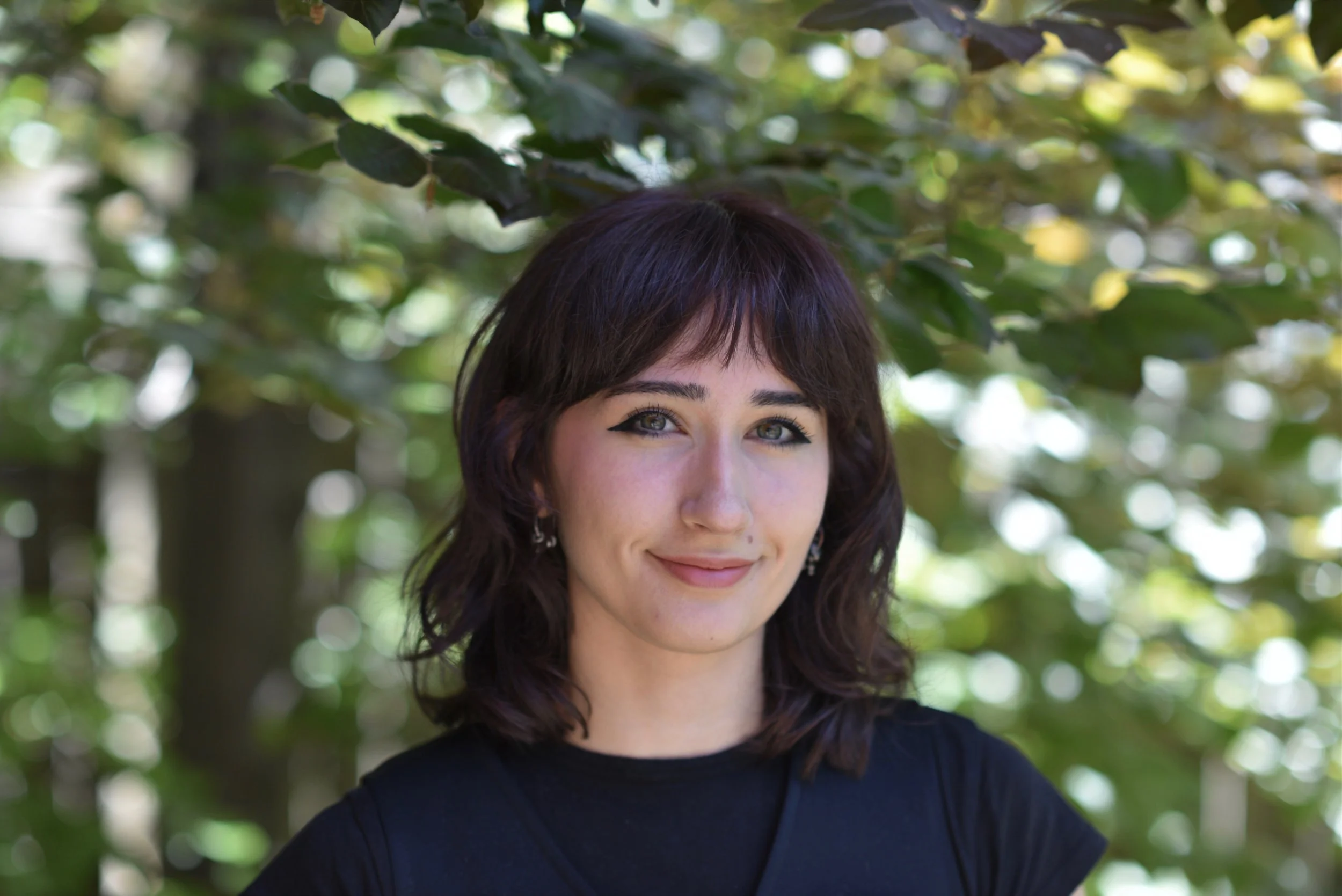
Dina Lojpur
AI Development & Operations, IT Technician, Public Services and Procurement Canada
Major: Computer Science and Cognitive Science, with a focus in Computational Cognition
Minor: Cinema Studies
Grad Year: 2025
After graduating from the University of Toronto last year, Dina Lojpur quickly stepped into the world of applied AI, bringing with her a perspective shaped by computer science, cognitive science and creative study.
Her experience reflects a growing interest in how technology intersects with people, policy and everyday life — and how early career exploration can shape a meaningful path forward.
This Q&A has been edited for clarity and length.
What first drew you to study computer science, and when did you realize you wanted to focus on AI and emerging technologies?
In high school, my older sister joined both the robotics and coding club and encouraged me to join as well. After spending time building and programming robots to move around, pick up objects and compete in competitions, I realized how much I enjoyed problem-solving and the creative side of technology.
While studying computer science at U of T, I became interested in AI, but it was not until I took a cognitive science course called Minds and Machines that I realized I wanted to focus on AI and emerging technologies more seriously. Up until then, I had learned about the technical side of AI through computer science courses, but this course introduced me to the human side.
We explored topics ranging from the Turing Test to modern AI approaches like deep learning, along with questions about cognition, perception, consciousness and how humans interact with intelligent systems. What really stuck with me was seeing how computer science, cognitive science and philosophy are intertwined. It made me interested not just in building AI systems that work technically, but in understanding how they affect people and how we can design them to be responsible, trustworthy and human-centred.
At U of T, you combined computer science with computational cognition and cinema studies — how did that interdisciplinary approach shape your perspective on technology and its impact?
Although some people can easily see the connection between computer science and computational cognition, cinema studies can seem a little unexpected. For me, though, all three were very connected and gave me different ways of understanding how technology shapes human experience.
Computer science gave me the technical foundation through software development, algorithms and systems thinking, while computational cognition helped me understand how people think, learn and make decisions. Cinema studies brought a different perspective by encouraging me to think critically about culture, storytelling, media and the societal impact of technology. It also gave me an outlet for creativity, which I often brought into my computer science and cognitive science work to take more out-of-the-box approaches.
Bringing these disciplines together gave me a much more holistic perspective. Rather than viewing technology as something to simply build, I learned to think about who it serves, how people experience it and the broader social impact it can have. This way of thinking still shapes how I approach technology today.
You’ve contributed to AI standards and ethics in Canada — why is this work especially important right now, and what role do you hope to play in shaping responsible AI?
During my time at U of T, I worked at the Digital Governance Council's Digital Governance Standards Institute, where I created the seed document for CAN/DGSI 128: Machine Learning and AI Implementation in Research Institutions. I drew from both my computer science and cognitive science courses, and it was later approved by the technical committee and used as the starting point for the national standard.
This work feels especially important right now because AI is developing so quickly, while the rules and guidelines are still catching up. In areas like privacy, security and responsible use, there are still a lot of open questions, and it can feel a bit like the Wild West. Standards help bring structure by giving organizations clear guidance and best practices for using AI responsibly.
Going forward, I hope to stay involved in this space and continue helping bridge the gap between the technical and human sides of AI. I want to help shape AI in a way that supports innovation while also ensuring we think carefully about risks and broader societal impact.
Was there a project, experience, or moment during your time at U of T that really changed your direction or clarified what you wanted to pursue?
During one of my earlier years at U of T, I took a computer science class that was very technical, with a focus on coding and runtime analysis. One week, a guest lecturer spoke about governance standards, how they connect to computer science and why they matter in practice.
I remember feeling excited by the realization that computer science is not just about writing code. It also connects to decision-making and how technology is governed and used in society. That moment made me realize there is a lot more to computer science than software development and it pushed me to start exploring that intersection further. When I later had the opportunity to work at the Digital Governance Council, I was excited to dive deeper into standards and governance work.
Outside of your work in AI, what interests or creative pursuits do you gravitate toward — and do they influence how you think about technology?
Outside of my work in AI, I’m really into film and music. During my time at U of T, I made sure not to lose that creative side of myself, which is why I pursued a Cinema Studies minor alongside my double major. Through that, I was able to combine my interest in music with film and even create original songs for projects.
I collect vinyl, cassettes and CDs, play guitar and write music on the side (I am John Frusciante’s biggest fan). Having a creative outlet has really shaped how I think about computer science. It helps me approach problems in a more open and non-traditional way.
For a while, I struggled with imposter syndrome because I did not always relate to what other CS students seemed passionate about. Over time, I realized that this difference is not a bad thing — it allows me to bring a different perspective to how I think about problems and solutions.
What are your goals for the next few years, both professionally and personally? Where do you hope your work in AI will take you?
Over the next few years, I want to keep strengthening my software development skills while taking on challenges that push me outside my comfort zone. I’m currently working at PSPC on the AI Development and Operations team, where I’m gaining exposure to how AI is implemented in real-world settings. It’s been valuable seeing both the technical side of building systems and the practical considerations that come with developing them responsibly.
I’m also part of the AI4Good Lab 2026 Toronto cohort, founded by Mila and CIFAR and hosted at the Vector Institute. The program is helping me build stronger AI and machine learning skills while keeping a focus on responsible and ethical development.
Looking ahead, I hope to keep working at the intersection of technology, people and governance, whether that’s through software development, AI research, standards or policy related work. I also want to keep exploring new areas, since many of my most meaningful experiences have come from saying yes to things I was not fully comfortable with at the start. Overall, I’m interested in how AI can be used in the real world, especially for accessibility, decision support and improving processes when it’s designed thoughtfully.
What advice would you give to new graduates who are trying to land their first role and navigate the transition from university into a career in tech?
Imposter syndrome is uncomfortable, but most people experience it in some way. You are not as behind as you think — you are often just comparing your anxieties to other people’s accomplishments.
When applying to roles, do not wait until you meet every qualification. Just apply. In my opinion, the most important quality is being eager to learn and open to growth. When you approach work with a curious mind and a willingness to take on challenges, people notice, and it makes them excited to work with you.
I also recommend using LinkedIn to connect with recruiters or people in roles you’re interested in and asking for coffee chats. Most people are open to it, and it helps you stand out beyond just submitting a resume. It shows genuine interest and initiative!
Earlier on, I was not always confident in my coding skills, but I still ended up in a technical role where I’m making PRs every day and contributing to meaningful projects. A lot of growth comes from being thrown into the deep end and learning as you go. I really believe in not waiting until you feel 100 per cent ready and just learning to do it scared. That has been my motto for the past couple of years. :)