Top

Graduation Spotlight: Antoine Finot

Antoine Finot
Computer Science specialist, Statistics minor
Victoria College

Why did you choose U of T for your undergrad?

I chose U of T for its well-regarded academic programs and flexibility in switching majors throughout undergrad. I was also pulled by the opportunity to study right in the center of a large city since I had grown up in the suburbs. There’s always so much to do!

What inspired you to study computer science?

I played a lot of video games growing up, and my parents often encouraged me to try making one instead of just playing them. While I never got around to making one (I tried!), I took computer science courses in high school and really enjoyed them. So much of our lives revolve around technology, and I find it really cool that there are just regular people behind it.

Who or what at U of T influenced your education the most?

Professor Paul Gries! He was my professor for CSC207 Software Design and was also part of the Technology Leadership Initiative. He always brought energy to the classroom and was always positive, no matter the situation. He’s been an amazing person for me to talk to for many topics, from running a club to grad school.

How did you get involved at U of T outside of your coursework?

I was involved in multiple extracurriculars during my undergrad. I was on the self-driving car team, helped run the engineering and computer science career fair, started a computer science club, mentored international students, and managed finances for Victoria College’s intramurals. I was also a Teaching Assistant for several first and second-year courses.

If you could go back and give yourself one piece of advice at the start of your undergraduate degree, what would it be?

Have fun, but know your priorities! There is so much to do on-campus and around Toronto, and there’s a balance between those activities and academics.

Is there a lesson you learned as an undergraduate student that you’ll take with you moving forward?

Try new things and take risks. There’s nothing from the past four years that stands out as truly regrettable, and some of my best memories are from things that I was initially hesitant about trying.

What’s next for you?

I’ll be working at a startup called Ridgeline in New York City!

Graduation Spotlight: Samantha Fassnacht

Samantha Fassnacht
Computer Science major, Environmental Studies minor, Environment and Energy minor
New College

Why did you choose U of T for your undergrad?

I first decided to apply to U of T because of its reputation as a strong school for computer science. But I chose to attend U of T when I first visited the campus for a tour. From the moment I set foot in Front Campus, I felt at home and knew this was the right place for me.

What inspired you to study computer science?

Growing up, my favorite subject in school was math, but I knew from the first programming course I took in 9th grade that I wanted to study computer science in university. To me, computer science felt like an applied form of all my math knowledge, and I loved the scientific, problem-solving mindset required to write a program to achieve a task.

Who or what at U of T influenced your education the most?

I want to thank Professor Steve Easterbrook for mentoring me during my undergraduate degree and for providing me with the opportunity to conduct climate science research. From the beginning of my first year, he has inspired me and has taught me so much about climate science. I'm grateful for his guidance.

How did you get involved at U of T outside of your coursework?

I've been a member of Dig In Campus Agriculture since my first year at U of T, and I've been a co-coordinator for the club for three years. I've always loved gardening with my family, and it was important for me to find a way to maintain my connection with nature during my undergraduate degree. I'm glad I found a group of people that enjoys growing food as much as I do and who also want to share that passion with the whole campus! I've learned so much about organic gardening as a member of Dig In, and I'll miss the gardens when I graduate.

What U of T memory do you treasure the most?

It's too hard for me to choose just one! I have so many fond memories with friends in New College while we were in residence, and we've formed so many great memories in the years after. I'm so thankful that we're still so close, and I'm looking forward to more fun times with them post-graduation.

Is there a lesson you learned as an undergraduate student that you’ll take with you moving forward?

The most important lesson that I've learned, and that I'm still working on, is to slow down, relax, and enjoy the little moments in life. It can be all too easy to make yourself busy or always be pushing for the next big thing. But if you're always focused on the future, you can forget to enjoy the present, appreciate the people you care about, and to take care of your own wellbeing. I try to enjoy every day to the fullest.

What’s next for you?

My goal is to pursue a career in environmental technology, so I am very excited that I have recently started a full-time position working at ecobee! I'm proud to work for company that helps save energy and where I can pursue both of my passions: technology and sustainability. I love the city of Toronto, and I plan on eventually becoming a citizen of Canada.

Toniann Pitassi elected to the U.S. National Academy of Sciences

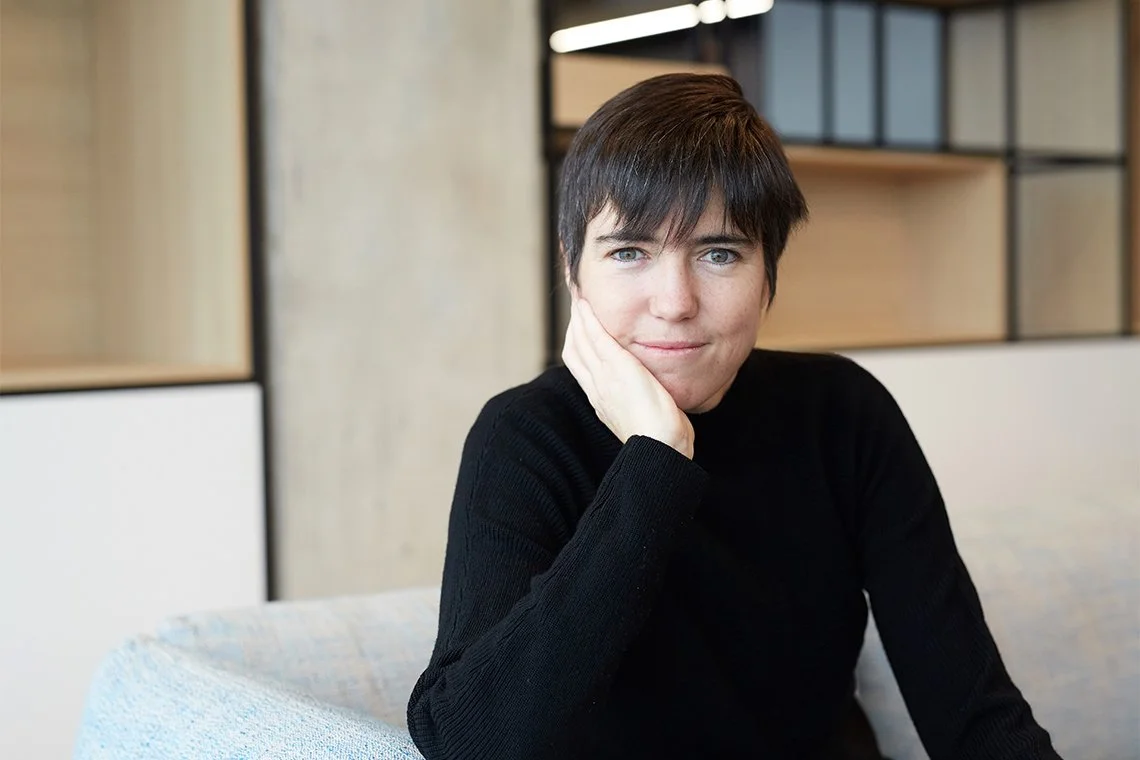
Toniann Pitassi

Toniann Pitassi — a professor and recent Bell Canada Chair in Information Systems in the Department of Computer Science, with a joint appointment in the Department of Mathematics — has been elected as a member of the U.S. National Academy of Sciences. The election recognizes ongoing research excellence and is considered among the highest of scientific honours.

Pitassi’s primary research area is computational complexity, a central component in the design of computer algorithms. The key problem in this field is to determine how many resources, including time and memory, an algorithm will require in order to perform most efficiently. Pitassi seeks to understand both the size allocation of resources needed to solve important computational problems, and the relationships and tradeoffs between such resources.

The most famous problem in computational complexity is the driving force behind much of Pitassi’s research. Known as the P versus NP problem, it asks whether every problem whose solution can be quickly verified can also be solved quickly. A solution to this problem would have profound implications not only for algorithmic research, but for mathematics, cryptography, artificial intelligence, game theory, philosophy, economics and many other fields.

Pitassi is also the Canada CIFAR AI Chair at the Vector Institute for Artificial Intelligence. She is concerned with ensuring fairness in artificial intelligence, and with the question of how to address biased data sources.

In addition to her positions at U of T and the Vector Institute, Pitassi is the Jeffrey L. and Brenda Bleustein Professor of Engineering at Columbia University. She received her BS and MS from Pennsylvania State University in 1985, followed by a PhD from the University of Toronto in 1992.

Named as a Fellow of the Association for Computing Machinery in 2018, Pitassi received the European Association for Theoretical Computer Science Research Award in 2021. She is currently a research lead at the Schwartz-Reisman Institute for Technology and Society, and holds a five-year appointment as visiting professor at the Institute for Advanced Study.

Read more about the problem that guides much of Toniann Pitassi’s research.