
Note: Event details may change. Please refer to the University of Toronto Robotics Institute’s events page for the most current information.
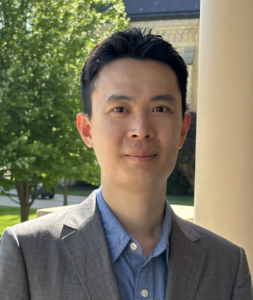
Speaker:
Tongjia Zheng
Talk title:
Scalable Autonomy: From Robot Swarms to Soft Continuum Robots
Date: Friday, October 30, 2026
Time: 3-4 p.m.
Location: Myhal Centre for Engineering Innovation & Entrepreneurship, Room 580 or online (Zoom)
Registration is not required to attend this event.
Abstract:
My research is motivated by the scalability challenge in autonomous systems. As systems grow in scale—from single robots to large swarms, or from rigid-body mechanisms to infinite-dimensional soft continuum bodies—many traditional methods become impractical. My work addresses this challenge by identifying physics-based, system-level invariances that remain tractable independent of scale, using tools from continuum mechanics, control theory, and applied math.
I will first present a density-based estimation and control framework for robot swarms, inspired by diffusion processes, that drives large robot populations to desired spatial distributions using only local sensing and communication. I will then discuss hydrodynamics-inspired strategies for robot-assisted human evacuation, where a small number of mobile robots guide large crowds through adaptive interaction. Last, I will present a dynamic state estimation framework for soft continuum robots that estimates their distributed states from sparse sensing, based on elastic beam theory and energy principles.
Bio:
Tongjia Zheng is a Postdoctoral Fellow in the Continuum Robotics Laboratory and the Robotics Institute at the University of Toronto and an incoming assistant professor in the Department of Mechanical Engineering at the University of Alberta in January 2027. He received his Ph.D. in Electrical Engineering from the University of Notre Dame in 2024, where he was awarded the department’s Research Excellence Award. He also earned a Master’s degree in Interdisciplinary Mathematics from Notre Dame in 2023. Prior to that, he obtained his Bachelor’s degree in Automation (2015) and a Master’s degree in Control Theory and Control Engineering (2017) from South China University of Technology. His research is motivated by the scalability challenge in autonomous systems, with a current focus on swarm robotics and soft continuum robotics. He is a recipient of the Schmidt AI in Science Postdoctoral Fellowship.