
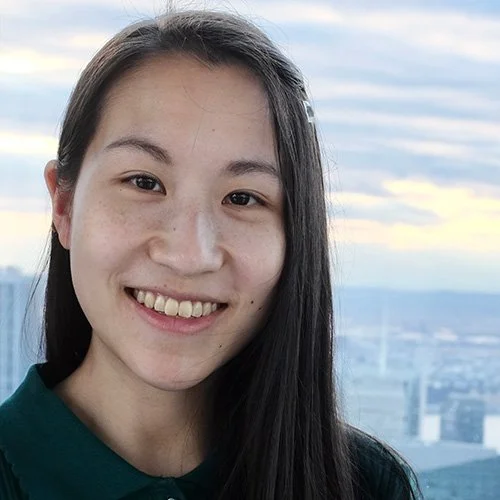
Speaker:
Michelle Lam
Talk Title:
Just-in-Time Architectures for Specialized AI Interactions
Date and Location:
Friday, February 20, 2026
Bahen Centre for Information Technology, BA 3200
This lecture is open to the public. No registration is required, but space is limited.
The grad roundtable that follows the talk is open only to current University of Toronto Department of Computer Science graduate students.
Abstract:
Using a large language model is like talking to a personal assistant, confidant, topic expert, and copyeditor all at once: and that’s a problem. By optimizing over many possible users, situations, and objectives, today’s pre-defined AI systems ultimately produce generic AI interactions. In this talk, I argue that just-in-time architectures can produce specialized AI interactions that enable users to redirect generic AI systems to realize their specific, distinctive goals. I demonstrate this concept by introducing just-in-time (JIT) objectives, which specialize outputs to a particular user by inducing user objectives from observed interaction traces. JIT objectives enable on-the-fly generation of software tools that visualize a research statement’s logical argument, test alternate color palettes for a figure, or provide feedback based on relevant academic experts. Then, I demonstrate how this approach also enables interventions into other AI systems such as social media rankers (Societal Objective Functions) and concept induction from unstructured text data (LLooM). This work argues that just-in-time AI interactions are a viable strategy to expand user control and combat the issues of generic AI interactions.
About Michelle Lam:
Michelle Lam is a Computer Science PhD candidate at Stanford University in the Human-Computer Interaction Group. She designs, builds, and deploys novel systems for user-controllable AI, shifting the work of defining and evaluating AI objectives closer to the time and place where end users interact with AI. Michelle publishes at top HCI venues such as ACM CHI, UIST, and CSCW, where she has received Best Paper Awards (CSCW ’24, CHI ’22), an Impact Recognition (CSCW ’24), and a Best Paper honorable mention (CSCW ’23). She was recognized as a Rising Star in EECS, Stanford Interdisciplinary Graduate Fellow, and Siebel Scholar.